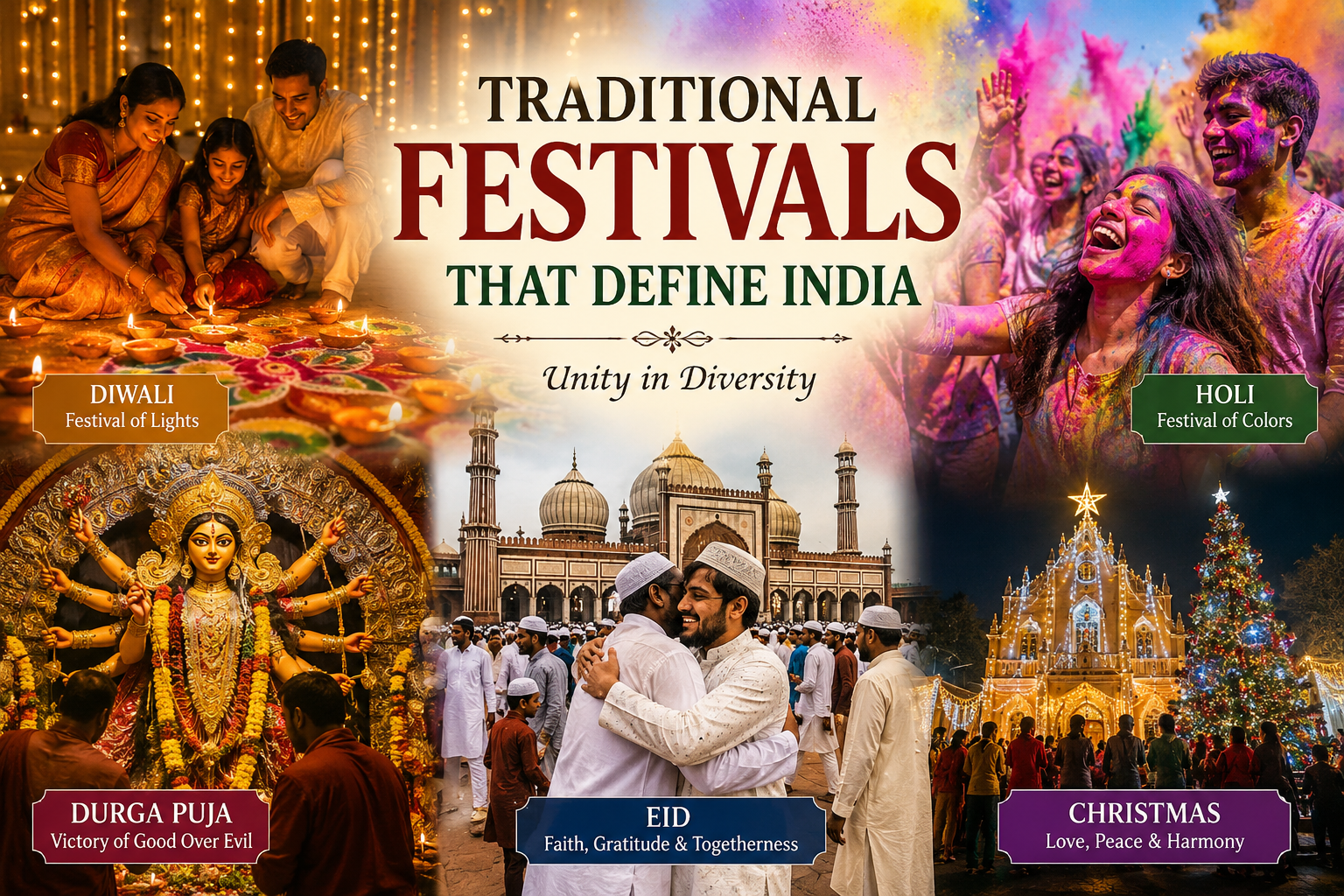
India is a land of incredible diversity, where every region celebrates unique traditions, beliefs, and cultural practices. Festivals in India are more than just holidays—they are vibrant expressions of faith, history, family values, music, dance, and food. From colorful street parades to sacred rituals, these celebrations bring millions of people together and showcase the spirit of unity in diversity. Across villages, towns, and modern cities, festivals continue to shape the cultural identity of the nation.
Diwali – The Festival of Lights
Diwali is one of the most celebrated festivals in India. Known as the Festival of Lights, Diwali symbolizes the victory of light over darkness and good over evil. Families decorate their homes with lamps, candles, and colorful rangoli designs while fireworks light up the night sky. People exchange sweets, gifts, and prayers for prosperity and happiness.
The festival has deep spiritual significance in Hindu traditions and is associated with the return of Lord Rama to Ayodhya after defeating Ravana. Businesses often begin new financial years during Diwali, making it both a spiritual and economic celebration. The atmosphere during Diwali reflects joy, togetherness, and hope.
Holi – India’s Most Colorful Celebration
Holi is famous worldwide for its explosion of colors and festive energy. Celebrated during spring, Holi marks the arrival of a new season and the triumph of good over evil. People gather in streets and open spaces to throw colored powders and water at each other while dancing to music and enjoying traditional sweets.
Holi breaks social barriers and encourages people to celebrate together regardless of age or background. In regions like Mathura and Vrindavan, Holi celebrations are especially famous for their cultural and religious importance. The festival captures the playful and joyful side of Indian culture.
Durga Puja – The Heart of Bengali Culture
Durga Puja is one of the grandest festivals in eastern India, especially in West Bengal. The festival honors Goddess Durga and celebrates her victory over the demon Mahishasura. Massive artistic pandals, cultural performances, and community gatherings transform cities into vibrant cultural centers.
In Kolkata, Durga Puja becomes a spectacular public celebration attracting visitors from around the world. Traditional music, dance, food stalls, and beautifully crafted idols create an unforgettable atmosphere. The festival reflects artistic creativity, devotion, and strong community spirit.
Eid and Christmas – Celebrating India’s Religious Harmony
Eid al-Fitr and Christmas also play an important role in defining India’s multicultural identity. Eid marks the end of Ramadan and is celebrated with prayers, feasts, charity, and family gatherings. Markets become lively with festive shopping, traditional clothing, and delicious dishes like biryani and seviyan.
Christmas is celebrated across India with decorated churches, festive lights, carol singing, and community events. Cities such as Goa and Shillong are particularly known for their vibrant Christmas celebrations. These festivals highlight India’s spirit of coexistence, where different religions and traditions are respected and celebrated together.
Conclusion
Traditional festivals are the heartbeat of India’s cultural identity. Whether it is the glowing lights of Diwali, the colorful joy of Holi, the artistic grandeur of Durga Puja, or the spiritual warmth of Eid and Christmas, each celebration tells a story of heritage and unity. These festivals preserve ancient traditions while bringing people together in modern times. They continue to define India as a nation rich in culture, spirituality, and diversity.
