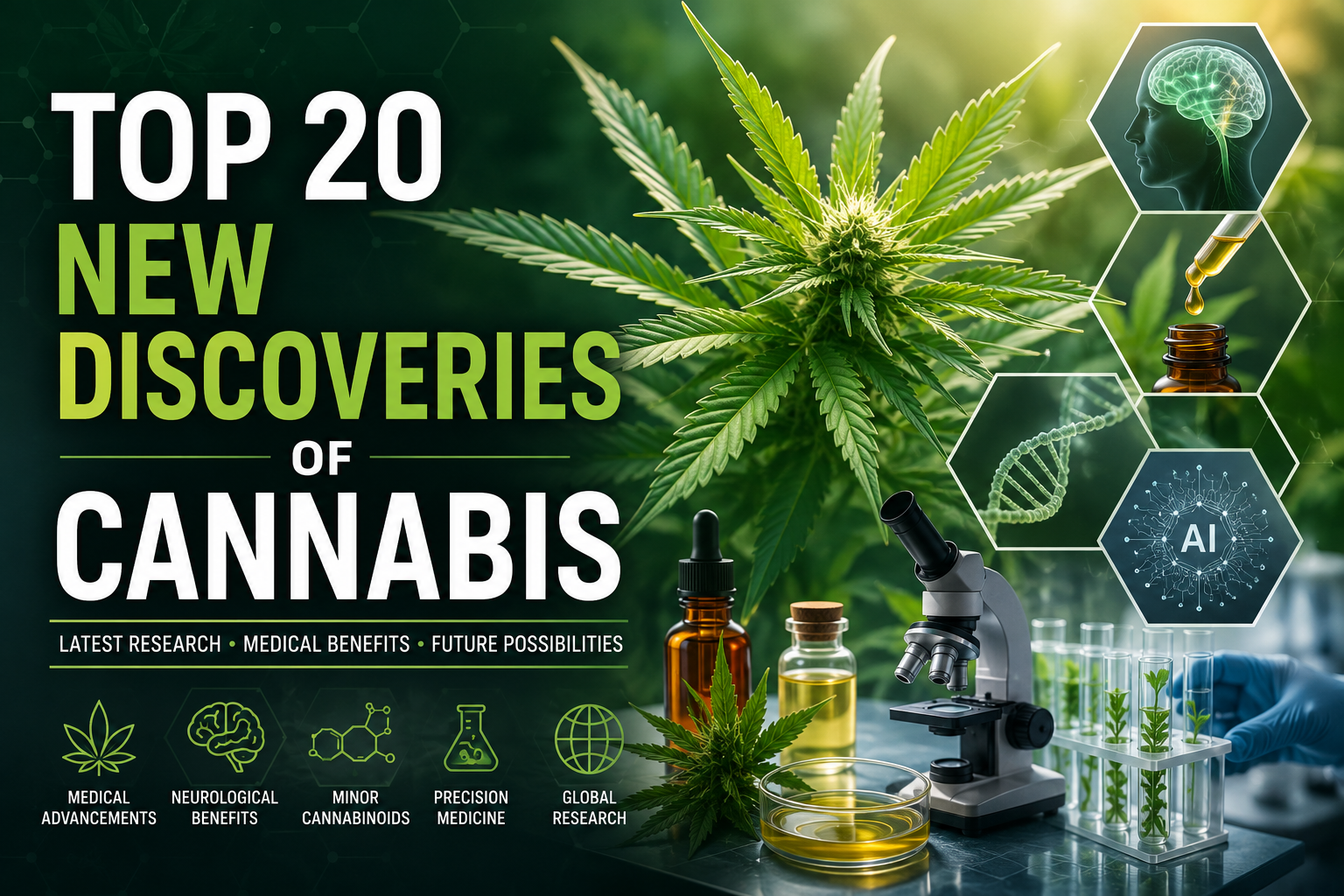
The Latest Scientific Breakthroughs, Medical Research, and Future Possibilities (2025–2026)
Cannabis has transformed from a controversial plant into one of the most researched natural substances in modern medicine. Over the past decade, scientists have made remarkable discoveries about its chemical compounds, medical potential, genetics, and therapeutic applications. While researchers continue to investigate both the benefits and risks of cannabis, recent studies have expanded our understanding of how cannabinoids interact with the human body.
Today, cannabis research extends far beyond recreational use. Scientists are exploring its role in treating chronic pain, epilepsy, anxiety disorders, neurodegenerative diseases, inflammation, cancer-related symptoms, and even precision medicine. At the same time, advances in artificial intelligence, genomics, and biotechnology are accelerating discoveries at an unprecedented pace.
This article explores 20 of the most exciting new discoveries about cannabis, highlighting the latest scientific developments, ongoing clinical research, and what these findings could mean for healthcare in the future.
Understanding Cannabis


Cannabis is a flowering plant containing more than 500 naturally occurring compounds, including over 100 cannabinoids. The two most widely studied cannabinoids are:
- THC (Tetrahydrocannabinol): Responsible for the plant’s psychoactive effects.
- CBD (Cannabidiol): Non-intoxicating and widely researched for therapeutic potential.
Cannabinoids interact with the body’s endocannabinoid system (ECS), which helps regulate pain, sleep, mood, appetite, immune function, and memory.
1. Better Understanding of the Endocannabinoid System
One of the biggest breakthroughs has been a deeper understanding of the endocannabinoid system. Scientists now know this biological network influences numerous bodily functions, making it an important target for future medicines.
Researchers continue discovering how cannabinoid receptors (CB1 and CB2) influence neurological health, inflammation, immune responses, and pain regulation.
2. Cannabis Shows Continued Promise for Chronic Pain
Millions of people worldwide suffer from chronic pain. Recent clinical studies suggest certain cannabis-based medicines may provide moderate relief for neuropathic pain, arthritis, and cancer-related pain.
Researchers emphasize that cannabis is not a universal replacement for traditional pain medications but may become an option for carefully selected patients under medical supervision.
3. CBD Continues to Show Benefits for Anxiety


Anxiety disorders affect hundreds of millions of people worldwide.
Recent research indicates CBD may help reduce symptoms associated with:
- Generalized anxiety disorder
- Social anxiety
- PTSD
- Stress-related disorders
Unlike THC, CBD generally does not produce intoxication, making it an attractive subject for continued medical research.
4. Cannabis Research in Alzheimer’s Disease
Scientists have discovered cannabinoids may:
- Reduce inflammation
- Protect brain cells
- Lower oxidative stress
- Help remove harmful proteins linked to Alzheimer’s disease
Although much of this research remains in laboratory and early clinical stages, results have generated significant interest.
5. Medical Cannabis Improves Sleep Quality
Insomnia affects millions globally.
Recent studies suggest carefully formulated cannabis products may improve:
- Sleep duration
- Sleep quality
- Night-time awakenings
- Chronic pain-related insomnia
Researchers continue evaluating the balance between potential benefits and long-term effects.
6. CBD Remains Effective Against Certain Forms of Epilepsy
CBD has become one of the strongest evidence-based cannabis therapies.
Clinical trials continue confirming its effectiveness in reducing seizures associated with severe childhood epilepsies such as:
- Dravet syndrome
- Lennox-Gastaut syndrome
This remains one of the most established medical uses of cannabis-derived compounds.
7. Cannabis Helps Manage Cancer Treatment Side Effects
Cannabis is increasingly studied for supportive cancer care rather than as a cure.
Researchers are evaluating its ability to reduce:
- Chemotherapy-induced nausea
- Vomiting
- Appetite loss
- Cancer-related pain
- Anxiety during treatment
Patients should always consult oncology specialists before using cannabis alongside cancer therapies.
8. THC and CBD Work Better Together
Scientists are investigating the so-called “entourage effect,” where cannabinoids and other plant compounds may work together to influence therapeutic outcomes.
While promising, researchers note that more high-quality clinical evidence is needed to fully understand these interactions.
9. Minor Cannabinoids Are Emerging Stars
Most people know THC and CBD, but researchers are increasingly studying lesser-known cannabinoids, including:
- CBG
- CBC
- CBN
- THCV
These compounds are being investigated for potential roles in inflammation, metabolism, sleep, pain management, and neurological health.
10. Cannabis May Help Reduce Opioid Use
Several observational studies suggest some chronic pain patients who use medical cannabis reduce their opioid consumption.
However, scientists caution that more rigorous clinical trials are needed before firm conclusions can be drawn.
11. Artificial Intelligence Is Transforming Cannabis Research


Artificial intelligence is accelerating discoveries by helping researchers:
- Identify new cannabinoids
- Analyze genetic data
- Predict therapeutic effects
- Improve plant breeding
- Optimize cultivation
AI is significantly reducing the time needed for complex research projects.
12. Cannabis Genome Mapping
Advanced DNA sequencing has helped scientists identify genes responsible for:
- THC production
- CBD production
- Disease resistance
- Flower development
- Plant yield
This knowledge supports the development of more consistent medicinal cannabis varieties.
13. Precision Cannabis Farming
Modern cannabis cultivation increasingly relies on smart agriculture.
Technologies include:
- IoT sensors
- Automated irrigation
- Drones
- AI-powered monitoring
- Climate-controlled indoor farming
These innovations improve quality while reducing water and energy use.
14. Better Cannabis Delivery Systems
Scientists are developing more precise ways to deliver cannabinoids, including:
- Metered-dose inhalers
- Oral dissolving strips
- Transdermal patches
- Nanoemulsion beverages
- Fast-acting capsules
These methods aim to improve dosing consistency and patient safety.
15. Personalized Cannabis Medicine
Future healthcare may tailor cannabis treatments based on:
- Genetics
- Medical history
- Metabolism
- Age
- Existing medications
Personalized medicine could reduce side effects while improving treatment effectiveness.
16. Cannabis and Inflammation
Chronic inflammation contributes to many diseases.
Researchers are studying cannabinoids for inflammatory conditions involving the joints, digestive system, and immune system. Early findings are encouraging, though further clinical trials remain necessary.
17. Terpenes Are Receiving Greater Scientific Attention
Terpenes give cannabis its aroma and may influence biological effects.
Examples include:
- Myrcene
- Limonene
- Pinene
- Linalool
Scientists are exploring how these compounds may contribute to relaxation, alertness, or anti-inflammatory effects alongside cannabinoids.
18. Mental Health Research Continues
Researchers are studying cannabis in relation to:
- Anxiety
- PTSD
- Depression
- Mood disorders
At the same time, they continue investigating risks associated with heavy or high-THC use, particularly among adolescents and people with certain mental health vulnerabilities.
19. Global Medical Cannabis Research Is Expanding
More countries are approving cannabis-based medicines and funding clinical research.
This has led to:
- Larger clinical trials
- Better product standardization
- Improved patient access in some regions
- Increased collaboration among research institutions
20. New Therapeutic Possibilities Continue to Emerge
Scientists continue exploring cannabinoids for potential applications in:
- Neurodegenerative diseases
- Autoimmune disorders
- Metabolic diseases
- Gastrointestinal conditions
- Skin disorders
- Rare neurological disorders
Many of these applications remain experimental but represent active areas of research.
Potential Benefits of Cannabis Research
Current evidence suggests cannabis-derived medicines may have potential in:
- ✔ Chronic pain management
- ✔ Epilepsy treatment
- ✔ Chemotherapy side-effect relief
- ✔ Anxiety research
- ✔ Sleep disorders
- ✔ Neurological disease research
- ✔ Inflammation studies
- ✔ Precision medicine
Challenges Facing Cannabis Research
Despite exciting progress, researchers still face several obstacles:
- Legal restrictions in some countries
- Limited long-term clinical data
- Variability between cannabis products
- Difficulty standardizing doses
- Need for larger randomized clinical trials
Addressing these challenges will help produce stronger evidence for future medical use.
The Future of Cannabis Science
The next decade is expected to bring advances in:
- AI-assisted drug discovery
- Personalized cannabinoid therapies
- Synthetic cannabinoids for specific conditions
- Improved pharmaceutical formulations
- Sustainable cultivation technologies
- Better understanding of the endocannabinoid system
As research expands, cannabis-derived medicines may become more targeted, consistent, and evidence-based.
Conclusion
Cannabis research has entered an exciting new era. From breakthroughs in understanding the endocannabinoid system to advances in genetics, artificial intelligence, and precision medicine, scientists are uncovering new possibilities that could influence healthcare for years to come.
At the same time, it is important to distinguish between well-established medical uses—such as certain forms of epilepsy and supportive cancer care—and areas where research is still emerging. Responsible scientific investigation, high-quality clinical trials, and careful regulation will continue to shape how cannabis is used in medicine.
While many discoveries are promising, cannabis is not a cure-all. Patients should always consult qualified healthcare professionals before using cannabis or cannabinoid-based products for medical purposes. As evidence grows, the future of cannabis research is likely to focus on safer, more personalized, and more effective therapeutic applications that benefit patients worldwide.
