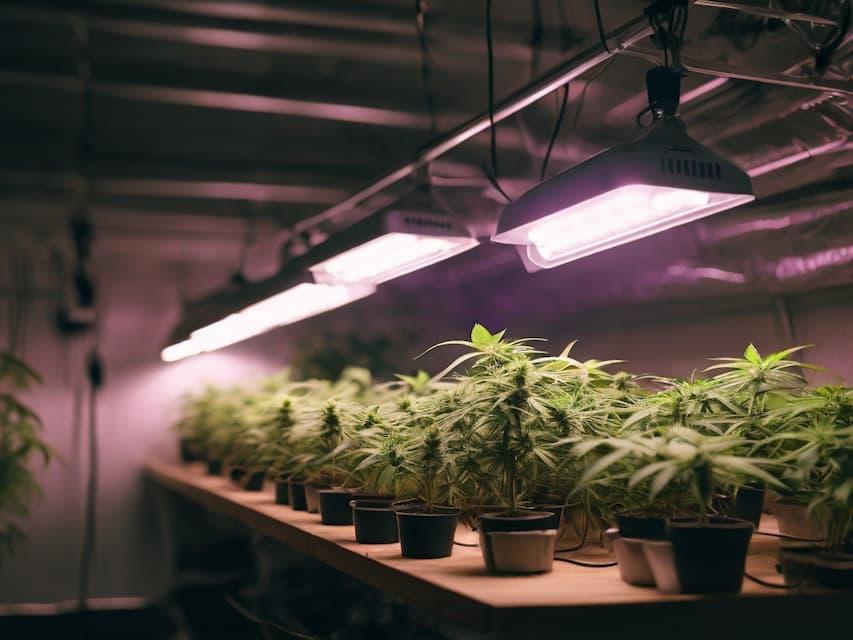


The cannabis plant is an annual flowering plant, meaning it completes its entire life cycle—from seed to seed production—in a single growing season. It belongs to the genus Cannabis in the family Cannabaceae.
1. Seed Stage
A cannabis seed contains:
- Embryo: The future plant.
- Seed coat: A protective outer covering.
- Food reserves: Stored nutrients that support the embryo during early growth.
When environmental conditions are suitable, the seed absorbs water, enzymes become active, and growth begins.
2. Germination
During germination:
- The seed coat softens and splits.
- The first root (called the radicle) emerges.
- The shoot grows upward toward light.
- The first seed leaves (cotyledons) open.
These initial leaves provide nutrients until the first true leaves develop.
3. Seedling Stage
During this early growth period:
- Roots expand rapidly.
- The stem becomes stronger.
- The first true leaves appear with their characteristic serrated edges.
- Photosynthesis becomes the plant’s primary energy source.
Like most green plants, cannabis converts sunlight into chemical energy.
4. Vegetative Growth
During vegetative growth the plant focuses on producing:
- Taller stems
- More branches
- Larger leaves
- An extensive root system
This is the fastest period of growth. Large fan leaves capture sunlight, while roots absorb water and mineral nutrients from the soil.
Main Plant Parts
- Roots: Absorb water and nutrients while anchoring the plant.
- Stem: Supports the plant and transports water and sugars.
- Leaves: Carry out photosynthesis and gas exchange through tiny pores called stomata.
5. Flowering Stage
As the plant matures, it develops flowers.
Cannabis is usually dioecious, meaning individual plants are typically either male or female, although some plants can be monoecious or develop both male and female flowers under certain conditions.
Male Plants
- Produce pollen in small pollen sacs.
- Usually grow taller with fewer leaves.
- Their role is reproduction through pollen production.
Female Plants
- Produce flowers that contain ovules.
- Develop resin-producing structures called trichomes.
- If pollinated, flowers produce seeds.
6. Trichomes


One of the most distinctive biological features of cannabis is its glandular trichomes.
These tiny, hair-like structures:
- Protect the plant from insects and UV radiation.
- Produce sticky resin.
- Synthesize cannabinoids and aromatic compounds.
The major compounds produced include:
- THC (tetrahydrocannabinol)
- CBD (cannabidiol)
- Other cannabinoids in smaller amounts.
Trichomes also produce terpenes, which contribute to the plant’s characteristic aromas and may help defend against herbivores and pathogens.
7. Pollination and Seed Production
If pollen from a male flower reaches a receptive female flower:
- Fertilization occurs.
- Seeds begin to develop.
- The plant allocates more energy toward seed production.
If pollination does not occur, female flowers do not produce seeds and instead continue developing their resin-rich floral structures as part of normal reproductive biology.
8. Seed Maturation
Mature seeds:
- Develop a hard protective coat.
- Accumulate stored nutrients.
- Enter a dormant state until conditions favor germination.
This completes the annual life cycle.
Plant Reproduction and Genetics
Cannabis reproduces sexually through pollen and ovules. Each seed receives genetic material from both parents, creating genetically unique offspring.
Selective breeding has produced varieties with different characteristics, such as:
- Plant height and branching pattern
- Flowering time
- Disease resistance
- Relative cannabinoid profiles (for example, higher THC, higher CBD, or balanced levels)
Summary of the Life Cycle
| Stage | Biological Events |
|---|---|
| Seed | Dormant embryo with stored nutrients |
| Germination | Root and shoot emerge |
| Seedling | True leaves form and photosynthesis begins |
| Vegetative Growth | Rapid development of roots, stems, and leaves |
| Flowering | Male or female reproductive structures develop |
| Pollination | Pollen fertilizes ovules (if it occurs) |
| Seed Development | Seeds mature inside the flowers |
| Senescence | The annual plant completes its life cycle and dies after reproduction |
Overall, cannabis follows the same fundamental biological principles as many flowering plants: it captures sunlight through photosynthesis, grows vegetatively, develops reproductive organs, and ultimately produces seeds to begin the next generation. Its distinctive biology lies in the production of resin-filled trichomes, which synthesize cannabinoids and terpenes that play important ecological roles for the plant.
