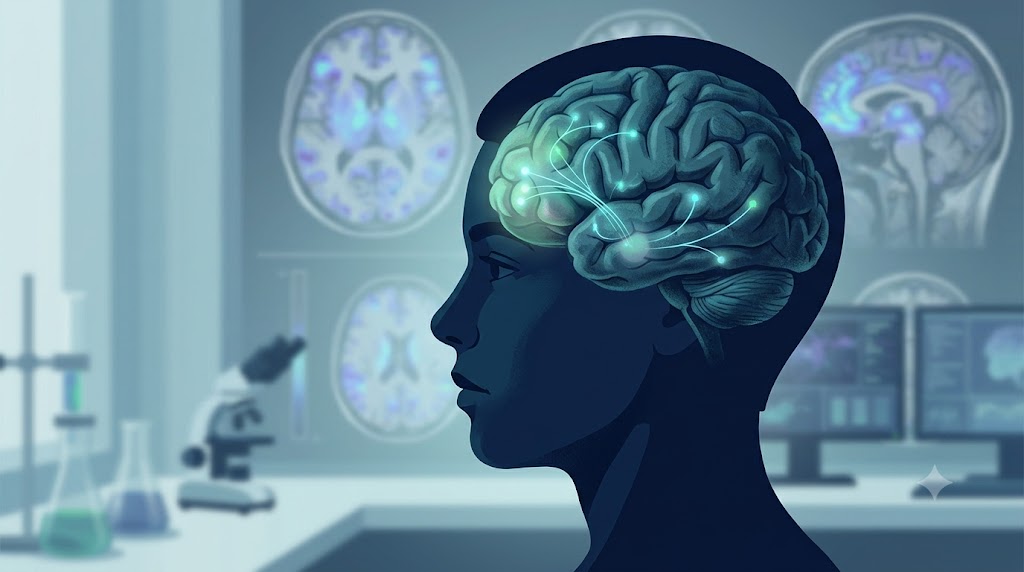


Meta title: Cannabis Use During Adolescence: Brain Reward System Research
Meta description: Explore research on adolescent cannabis use, brain reward processing, dopamine, motivation, decision-making, and the limitations of current scientific evidence.
Suggested URL slug: cannabis-use-adolescence-brain-reward-system
Category: Adolescent Health · Brain Development · Psychology
Tags: Cannabis Research, Adolescent Brain Development, Cannabis and Mental Health, Brain Reward System, Dopamine, Neuroscience, Teen Health, Substance Use Prevention, Psychology Research, Public Health
Introduction: Why Adolescent Cannabis Research Matters 🌱
Adolescence is a period of substantial change in the human brain. During these years, the systems involved in learning, emotional regulation, motivation, reward processing, and decision-making continue to develop. Experiences during this stage can influence behaviour, habits, and long-term health.
Cannabis has attracted considerable scientific attention because it contains compounds that interact with the body’s endocannabinoid system, a network involved in regulating several processes, including memory, mood, appetite, and neural communication. One of its principal intoxicating compounds is delta-9-tetrahydrocannabinol (THC), which can alter perception, attention, memory, and the experience of reward.
Researchers are particularly interested in whether using cannabis during adolescence is associated with measurable differences in how the brain responds to rewarding experiences, such as earning money, completing a challenge, or receiving positive feedback.
A research paper identified by the DOI 10.1007/s00213-026-07183-9 is the focus of this article. The study is reported as having been published on October 17, 2026, and concerns reward processing among regular cannabis users whose use began before age 18. Because the publication date is very recent, the article’s full methods and results should be checked against the original paper before attributing specific findings to its researchers.
Related peer-reviewed research has already examined brain activity during reward anticipation in adolescent and adult cannabis users, with findings that underscore the complexity of this subject. Results across studies have not been entirely consistent.
The central question is therefore not simply whether cannabis changes the brain, but how cannabis exposure, adolescent development, individual vulnerability, and environmental influences may interact to shape reward-related behaviour.
Understanding the Brain’s Reward System 🧠

The brain’s reward system is a network of interconnected regions that helps people learn which experiences are rewarding and motivates them to repeat behaviours that meet their needs or goals. It contributes to everyday activities such as eating, socialising, studying, playing sports, and pursuing achievements.
Reward processing involves several stages. The brain may first anticipate a potential reward, then respond when the outcome arrives, and finally use the experience to guide future decisions.
For example, a student preparing for an examination might feel motivated by the prospect of passing. When the student receives a good result, the experience can reinforce the value of studying. If the result is disappointing, the brain may update expectations and influence future effort.
Several brain regions contribute to these processes.
The ventral striatum and reward anticipation
The ventral striatum, which includes the nucleus accumbens, is involved in motivation, reward learning, and anticipating valuable outcomes. It helps the brain evaluate whether an expected reward is worth pursuing.
Researchers often study this region because its activity can change when a person expects a positive outcome. However, greater or lower activity is not automatically evidence of better or worse brain function. The meaning depends on the task, the brain region, the timing of the response, and the person’s behaviour.
The dorsal striatum and learned behaviour
The dorsal striatum contributes to action selection, habit formation, and learning from repeated experiences. It helps connect actions with their consequences.
Repeated exposure to rewarding activities can strengthen behavioural patterns. Researchers therefore investigate whether substance use is associated with differences in how people learn from rewards and develop habits.
Nevertheless, brain activity alone cannot establish whether a particular behaviour has become a habit or whether cannabis caused a change in that behaviour.
The prefrontal cortex and decision-making
The prefrontal cortex supports planning, attention, impulse regulation, and the evaluation of future consequences.
During adolescence, these abilities continue to mature. Young people may therefore respond differently to immediate rewards and delayed benefits than older adults do, although individual differences are substantial.
The interaction between motivation and decision-making is especially relevant when studying substances that may affect attention, judgement, and learning.
Why researchers study these regions together
Reward processing does not occur in a single brain area. It emerges from communication among neural networks involved in motivation, emotion, learning, and cognitive control.
Scientists use brain imaging and behavioural experiments to investigate these networks. Such measurements can help identify patterns associated with cannabis use, but they cannot independently determine the cause of those patterns.
What Does the New Cannabis Research Investigate? 🔬
The October 2026 study described in the research announcement focuses on people whose regular cannabis use began before age 18. Its reported findings concern preliminary differences in brain activity and performance during a reward-related task.
The distinction between an association and a demonstrated cause is essential when interpreting this kind of research.
The supplied research summary describes a small study of regular cannabis users. I could not independently retrieve the full paper through the DOI during this review, so the precise sample size, comparison groups, task design, statistical results, and effect sizes should be verified in the original article before being reported as established details.
Even with that limitation, the broader research question is important: do people who begin using cannabis during adolescence process non-drug rewards differently from people who do not use it?
How reward-processing experiments work
One commonly used approach is the Monetary Incentive Delay task. Participants see cues indicating that they may win or lose money, respond to a target, and receive feedback about the outcome.
Researchers may use functional magnetic resonance imaging (fMRI) to measure changes in blood-oxygen-level-dependent signals associated with neural activity during different stages of the task.
This approach can help researchers distinguish among:
- Reward anticipation: activity while expecting a possible reward.
- Reward response: activity after receiving the outcome.
- Behavioural performance: measures such as response speed and accuracy.
- Reward learning: how expectations and decisions change after feedback.
These measures describe different aspects of behaviour and brain function. A person could show a difference in neural activity without performing worse on the task, or display a behavioural difference without a clear difference in a particular brain region.
Why task performance matters
Brain imaging provides information about neural responses, but behavioural results help researchers understand whether those responses relate to measurable actions.
For instance, if two groups show different brain activity but similar response times and accuracy, the neural difference should not automatically be interpreted as an impairment. It may reflect different strategies, levels of effort, or other processes that require further investigation.
Conversely, a performance difference does not establish that cannabis is responsible. Factors such as sleep, stress, other substance use, education, mental health, and pre-existing cognitive differences may influence results.
What a small study can tell us
A small study can identify a potential pattern worth investigating and help researchers develop hypotheses for larger projects.
However, small samples usually provide less precise estimates and may not adequately represent the wider population. Findings can also be sensitive to individual differences and statistical uncertainty.
For these reasons, preliminary evidence should be interpreted as a starting point rather than a definitive conclusion about the adolescent brain.
Cannabis, Dopamine, and Motivation ⚡
Dopamine is a neurotransmitter involved in motivation, learning, movement, and the processing of rewards. It helps the brain learn from experiences and respond to cues associated with potentially important outcomes.
Dopamine is often described as a pleasure chemical, but this is an oversimplification. It contributes to the processes that help people anticipate rewards, assign importance to cues, and adjust their behaviour after experience.
How THC interacts with the brain
THC acts on cannabinoid receptors, particularly CB1 receptors, which are widely distributed throughout the central nervous system. These receptors influence the release of neurotransmitters and help regulate communication between neurons.
Through these mechanisms, THC can influence neural pathways involved in memory, attention, mood, coordination, and reward processing.
The endocannabinoid system also plays a role in normal brain development. This makes the timing of exposure an important question for researchers, although the precise effects depend on factors such as dose, frequency, potency, developmental stage, and individual susceptibility.
Does cannabis reduce motivation?
The idea that cannabis inevitably makes users unmotivated is too simplistic.
Some research investigates associations between cannabis use and difficulties with motivation, attention, or everyday functioning. Other studies produce mixed findings, and it can be difficult to separate the effects of cannabis from depression, sleep problems, other substance use, and pre-existing differences.
Motivation is also not a single biological process. A person may be highly motivated in one setting but struggle with concentration or effort in another.
The October 2026 study’s reported reward-processing differences should therefore not be translated into a claim that all adolescent cannabis users lose motivation. That conclusion would require stronger evidence linking measured differences to meaningful, persistent changes in daily life.
Why non-drug rewards are important
Researchers often investigate responses to money or other ordinary rewards because they can help distinguish responses to everyday incentives from responses associated with substance-related cues.
The ability to anticipate and learn from ordinary rewards matters for schoolwork, relationships, hobbies, employment, and long-term planning.
However, a laboratory task is only a simplified model of everyday life. A difference in response to monetary rewards does not necessarily mean that a teenager will lose interest in friends, education, sport, or personal goals.
Why Adolescence Is a Sensitive Developmental Period 🌿
Adolescence involves changes in brain structure, neural connections, and the coordination of systems responsible for emotional responses and cognitive control.
The brain does not suddenly finish developing on a person’s eighteenth birthday. Development continues into young adulthood, and its pace varies across individuals and brain systems.
Three processes are particularly relevant to cannabis research.
Synaptic refinement and neural connectivity
As the brain develops, connections between neurons are strengthened, modified, or removed according to developmental processes and experience. This refinement helps neural networks become more specialised and efficient.
The endocannabinoid system participates in synaptic signalling and plasticity. Scientists therefore investigate whether exposure to substances that interact with this system may influence developmental processes.
Evidence from biological and animal research can help identify possible mechanisms, but results cannot automatically be applied to every human adolescent.
Executive function and impulse regulation
Executive functions include working memory, planning, attention control, and the ability to pause before acting.
These abilities support classroom learning, managing responsibilities, and evaluating long-term consequences. Cannabis intoxication can temporarily impair some cognitive functions, including attention, memory, reaction time, and coordination.
Frequent cannabis use during adolescence is also associated in some research with cognitive and educational difficulties. However, the extent to which these associations reflect direct cannabis effects, pre-existing vulnerabilities, or shared environmental factors remains an important research question.
Emotional development and social influences
Adolescent behaviour is shaped by more than biology. Peer relationships, family circumstances, school environments, stress, social media, and access to substances can influence decision-making.
Some adolescents may use cannabis in response to stress or emotional difficulties. Others may encounter it through friends or social settings.
These differences matter because the factors that lead someone to start using cannabis may also influence their mental health and reward-related behaviour. Researchers must account for these possibilities before drawing conclusions about causation.
What Earlier Studies Tell Us About Cannabis and Reward Processing 📚
The October 2026 study should be considered alongside earlier peer-reviewed research rather than in isolation.
A 2022 study published in Neuropsychopharmacology examined neural responses to reward anticipation and feedback among adolescent and adult cannabis users and matched controls. It included 125 cannabis users across the adolescent and adult groups, together with comparison participants. The researchers used fMRI and a monetary incentive task to examine reward-related responses.
A separate longitudinal study published in Neuropsychopharmacology in February 2026 investigated reward anticipation at baseline and after 12 months. It included 46 adolescent and adult cannabis users in the reported user groups and 50 age-matched controls, with participants assessed using a monetary incentive task. The study reflects the importance of examining how reward-related brain measures change over time rather than relying solely on a single assessment.
These studies illustrate several important principles.
First, cannabis research increasingly uses comparisons across age groups and repeated measurements to examine whether associations differ with developmental stage.
Second, reward processing includes anticipation and feedback, which may not produce identical results.
Third, evidence from brain imaging is not uniformly consistent. Researchers must account for differences in participant characteristics, cannabis exposure, study design, and analytical methods.
Finally, a group-level difference does not necessarily predict what will happen to a particular individual.
The broader scientific picture is therefore one of ongoing investigation, not a settled conclusion that every adolescent cannabis user experiences the same neurological change.
Potential Effects on Learning, Memory, and Decision-Making 📖
The reward system works closely with the brain systems responsible for learning and memory. This connection helps people remember which actions produce useful outcomes and decide what to do in similar situations.
Cannabis can temporarily affect several cognitive functions, particularly when a person is intoxicated. The possible consequences are especially relevant for adolescents, who are developing the skills needed to manage schoolwork, relationships, and increasing independence.
Attention and concentration
Attention helps students follow lessons, process instructions, and complete assignments. Cannabis intoxication can interfere with concentration and the ability to process information efficiently.
Frequent use may also coincide with sleep disruption, reduced school engagement, or other factors that affect attention. Research must distinguish these overlapping influences when assessing long-term outcomes.
Memory and information processing
THC can interfere with memory formation and recall. This matters during adolescence because learning frequently depends on encoding new information and retrieving it later.
For example, a student who struggles to remember material studied during a period of intoxication may find it harder to prepare for an examination. The degree of impairment varies with exposure, timing, and individual characteristics.
Decision-making and risk evaluation
Decision-making involves weighing immediate rewards against possible future consequences. Cannabis intoxication may impair judgement and reaction time, making activities such as driving especially dangerous.
Researchers are also interested in whether frequent use is associated with longer-term differences in decision-making. These questions require careful study because people who use cannabis may differ from non-users in ways that existed before cannabis exposure.
Important distinction: Temporary effects during intoxication, associations with frequent use, and persistent changes after stopping are three different outcomes. They should not be treated as interchangeable.
Cannabis Use and Adolescent Mental Health 💚
Cannabis use during adolescence has also been investigated in relation to anxiety, depression, problematic substance use, and psychotic symptoms.
The evidence varies by outcome, and associations do not mean that cannabis inevitably causes a mental health condition. Nevertheless, early initiation, frequent use, and exposure to high-THC products are important concerns in public health research.
Anxiety and emotional wellbeing
Some people experience relaxation after using cannabis, while others experience anxiety, panic, or unpleasant changes in perception. THC can produce different effects depending on the person, dose, setting, and product.
Using cannabis to cope with emotional distress may also complicate the identification and treatment of the underlying problem.
Psychosis-related risks
Research has associated cannabis use, particularly frequent use of high-potency products, with an increased risk of psychosis-related outcomes. The relationship is complex, and individual vulnerability plays an important role.
Adolescents experiencing hallucinations, severe paranoia, or major changes in their thinking should receive prompt professional assessment rather than assuming these symptoms will resolve without help.
Cannabis use disorder
Some people develop cannabis use disorder, a condition involving difficulty controlling use despite negative consequences.
Warning signs can include repeated unsuccessful attempts to stop, strong cravings, neglect of important responsibilities, and continuing to use despite problems at school, work, or in relationships.
Starting early does not guarantee addiction. However, early initiation and frequent use are relevant risk factors that deserve attention in prevention and clinical care.
Limitations of the October 2026 Study ⚠️
The study described in the research announcement may contribute useful evidence, but several limitations should be considered before interpreting its implications.
Small sample size. A small study may detect a potential pattern, but its estimates can be imprecise. Replication in larger samples is important.
Causation cannot be assumed. If researchers observe differences between cannabis users and non-users at one point in time, they cannot establish that cannabis caused those differences. Pre-existing characteristics may contribute to both substance use and brain activity.
Exposure varies. Cannabis products differ in THC concentration and other constituents. Frequency of use, duration, age at initiation, and cumulative exposure can all influence the interpretation of results.
Laboratory tasks are limited. Responses to monetary incentives do not capture the full complexity of motivation, emotional wellbeing, or everyday decision-making.
Individual differences matter. Sleep, stress, mental health, socioeconomic circumstances, alcohol and nicotine use, and other variables may affect the findings.
Long-term outcomes require follow-up. A difference in brain activity does not necessarily persist, lead to functional impairment, or predict a particular future outcome.
The precise statistical results and methods of the October 17 paper should be checked against the full article before its findings are described in greater detail. The DOI provided in the research announcement is the appropriate starting point: Read the original research on Springer Nature.
What Future Research Needs to Investigate 🔎
Future research could help establish whether observed reward-processing differences precede cannabis use, emerge after exposure, or reflect a combination of factors.
Longitudinal studies are especially valuable because researchers can assess participants before or near the start of cannabis use and follow them over several years.
Researchers could investigate several questions:
- Do reward-processing differences appear before cannabis initiation?
- Are outcomes different for occasional users and frequent users?
- Does THC potency influence the observed associations?
- Do brain measures change when people reduce or stop using cannabis?
- Are findings consistent across different genders, socioeconomic backgrounds, and mental health profiles?
- Do laboratory findings predict meaningful changes in academic performance, relationships, or daily functioning?
Studies should also include appropriate comparison groups and carefully measure other substance use, sleep, mental health, and environmental factors.
Combining brain imaging with behavioural assessments and real-world outcomes would provide a more comprehensive picture than relying on a single measurement.
Prevention and Support for Adolescents 🛡️
The purpose of adolescent cannabis research is not to stigmatise young people. It is to improve understanding, support informed decisions, and identify opportunities for prevention and early intervention.
Parents, educators, healthcare professionals, and community organisations can contribute by providing accurate information and creating environments in which adolescents feel comfortable asking questions.
Encourage informed conversations
Conversations about cannabis are more effective when they are factual and non-judgemental. Young people should understand that products vary in potency, that intoxication can impair attention and judgement, and that adolescence is an important developmental period.
Fear-based messages may discourage adolescents from discussing their experiences. Listening carefully and providing reliable information can make it easier to seek help when necessary.
Address the reasons behind substance use
If a young person uses cannabis to cope with anxiety, sleep difficulties, stress, or social pressure, support should address those underlying concerns.
Healthcare professionals can help assess mental health symptoms, identify problematic patterns of use, and discuss appropriate treatment options.
Promote protective habits
Regular sleep, physical activity, supportive relationships, meaningful hobbies, and access to mental health care can support adolescent wellbeing.
These measures are not guaranteed to prevent cannabis use, but they can strengthen protective factors and help young people manage stress without relying on intoxicating substances.
For adolescents already using cannabis, a respectful conversation with a qualified healthcare professional can help determine whether further support is appropriate.
Conclusion: Understanding the Developing Brain
Research into cannabis use during adolescence is helping scientists investigate the relationship between substance exposure, motivation, learning, and the brain’s reward system.
The October 2026 study described in the research announcement adds to this research area by focusing on reward-related brain activity and task performance among people whose regular cannabis use began before age 18. However, its reported preliminary findings should not be interpreted as proof that cannabis causes permanent brain changes or that all adolescent users experience the same effects.
Earlier studies demonstrate why researchers need to examine reward anticipation, feedback, cognitive performance, and developmental differences separately. Larger samples, longitudinal follow-up, and careful control of confounding factors will be essential for clarifying the relationship.
The most responsible conclusion is that adolescent cannabis use warrants careful attention, while the precise relationship between early exposure and long-term reward processing remains an active scientific question.
Understanding that distinction allows parents, educators, healthcare professionals, and young people to engage with emerging evidence without exaggerating what a single study can establish.
