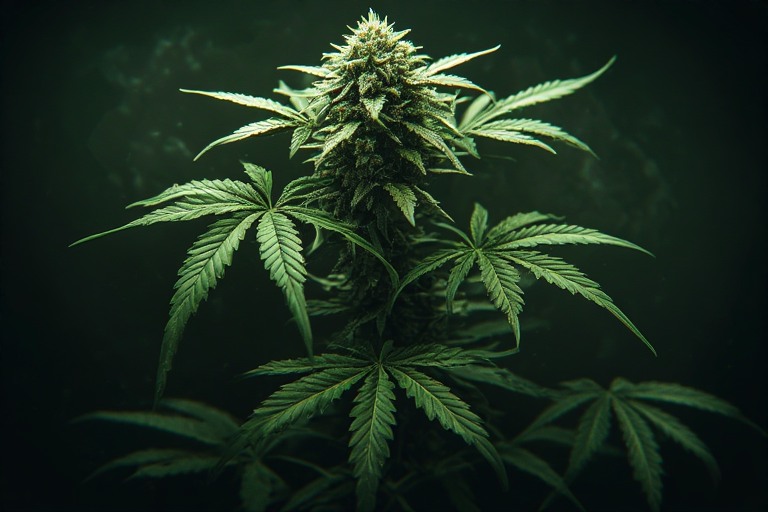
Cannabis laws around the world are no longer a simple “legal vs illegal” divide. Instead, countries have created a complex spectrum ranging from full recreational legalization to strict prohibition, with medical access and decriminalization sitting in between. As of 2026, global cannabis policy is in a period of rapid transition, shaped by public opinion, medical research, and economic opportunity.
1. Countries Where Cannabis Is Fully Legal
A small but growing number of countries have legalized cannabis for adult recreational use under regulated systems.
These countries typically allow:
- Adult possession limits
- Licensed retail sales
- Controlled cultivation (personal or commercial)
Examples include:
- Canada (nationwide legalization since 2018)
- Uruguay (first country to fully legalize in 2013)
- Germany (legalized adult possession and home cultivation in 2024, with evolving commercial framework)
- Malta and Luxembourg (regulated or partially regulated adult-use systems)
These models are often described as “regulated legalization,” where governments tightly control supply chains rather than allowing a completely free market.
2. Medical Cannabis-Only Countries
Much of the world falls into this category. Cannabis is legal only for medical use, usually requiring:
- Doctor prescriptions or approvals
- Licensed pharmacies or dispensaries
- Strict THC and product regulations
Large medical-only markets include parts of:
- Europe (e.g., UK, Italy, France under limited access systems)
- Latin America (e.g., Brazil, Colombia medical programs)
- Australia and New Zealand
Europe in particular shows a “patchwork system” with no unified EU cannabis law, meaning each country sets its own rules for medical access and prescribing standards.
3. Decriminalized Countries (Not Fully Legal)
Decriminalization does not mean legal cannabis, but it reduces or removes criminal penalties for small amounts of possession.
Common features include:
- Fines instead of jail time
- No criminal record for minor possession
- No legal retail market
Examples include:
- Portugal (all drugs decriminalized for personal use)
- Netherlands (tolerated “coffeeshop” system, but technically illegal production)
- Switzerland (small amounts decriminalized)
- Parts of Spain, Italy, and other European states with “grey zone” policies
These systems often aim to reduce harm and law enforcement burden while avoiding full commercialization.
4. Countries Where Cannabis Remains Illegal
Despite global reform, cannabis is still strictly prohibited in many countries, especially in parts of:
- Asia (e.g., Singapore, Japan, South Korea)
- Middle East (many Gulf states)
- Africa (varies widely, though some reforms are emerging)
- Eastern Europe and several developing nations
Penalties range from fines to long prison sentences, and in extreme cases, very harsh punishments depending on jurisdiction.
5. Regional Trends Shaping Global Policy
Europe: Rapid but Uneven Reform
Europe is currently the most dynamic region for cannabis reform. Countries like Germany and the Czech Republic are expanding legal frameworks, while others maintain strict prohibition or informal tolerance systems.
North America: Mature but Politically Divided
- Canada has a fully legal national market.
- The United States has widespread state-level legalization, but federal law still restricts cannabis, creating a fragmented system.
Latin America: Early Innovators
Countries like Uruguay pioneered legalization, while others are expanding medical and industrial cannabis programs.
Asia & Middle East: Mostly Restrictive
Legalization is limited, but some nations are cautiously exploring medical cannabis or industrial hemp.
6. Global Legalization Trends (2026)
Recent developments show several clear global trends:
- Medical-first legalization is expanding faster than recreational legalization
- Governments are tightening regulations after early commercialization waves
- More countries are adopting pilot programs and controlled licensing systems
- Industrial hemp markets are growing even in restrictive regions
Reports suggest cannabis legalization is increasingly viewed as a regulated health and economic policy issue, not just a criminal justice matter.
7. What the Future of Cannabis Laws Could Look Like
Over the next decade, several policy shifts are likely:
1. More Medical Legalization Worldwide
Countries with strict prohibition are increasingly expected to adopt at least medical cannabis frameworks.
2. Gradual Expansion of Recreational Legalization
Rather than sudden global legalization, more nations may adopt:
- Pilot adult-use programs
- Regional legalization zones
- State or province-level legalization before national rollout
3. Standardization of Regulations
International pressure may push toward:
- Product safety standards
- THC limits
- Controlled trade agreements
4. Continued Federal vs Local Conflicts
Countries like the U.S. demonstrate that cannabis policy can remain split between national and regional governments for years.
Conclusion
The global cannabis legal landscape is best understood as a continuum rather than a binary system. While a handful of countries have embraced full legalization, most of the world is somewhere between strict prohibition and regulated medical access. The strongest global trend is not uniform legalization, but gradual normalization through medical programs, decriminalization, and tightly regulated markets. As scientific research and economic pressures grow, cannabis policy is likely to keep evolving—unevenly, but steadily—across the world.
