Cannabis health has become an increasingly discussed subject in medicine, science, wellness, and public education. As researchers continue studying the cannabis plant and its naturally occurring compounds, people are asking more informed questions about cannabinoids, possible therapeutic applications, safety considerations, and the differences between medical and recreational use. 🌿🔬
The conversation around cannabis has changed considerably over time. What was once discussed primarily through social or legal perspectives is now also being examined through scientific research. Universities, laboratories, healthcare professionals, and public health organizations are investigating how cannabinoids interact with the human body and what their potential benefits and limitations may be.
Understanding cannabis health requires a balanced approach. Cannabis is not a single substance with one predictable effect. Different plants, products, cannabinoid concentrations, methods of consumption, individual characteristics, and health circumstances can all influence the experience. For this reason, responsible cannabis education should focus on evidence, safety, individual differences, and communication with qualified healthcare professionals. 🩺📚
Understanding the Cannabis Plant 🌱
Cannabis is a plant genus containing numerous chemical compounds known as cannabinoids. Two of the most widely recognized cannabinoids are tetrahydrocannabinol, commonly called THC, and cannabidiol, commonly called CBD.
THC is well known because it can produce psychoactive effects. CBD, in contrast, does not produce the same intoxicating effect associated with THC. However, both compounds interact with biological systems in complex ways, and researchers continue to investigate their possible effects.
The cannabis plant also contains terpenes and other compounds. Terpenes contribute to the aroma and flavor of different cannabis varieties and are being studied for their biological properties as well.
Cannabis health therefore cannot be understood simply by asking whether cannabis is “good” or “bad.” The more useful questions concern the specific product, chemical composition, dose, route of administration, reason for use, and characteristics of the individual.
For example, a standardized medical product used under professional guidance is different from an unidentified cannabis product obtained from an uncontrolled source. Similarly, a person using a cannabinoid-based medicine for a specific medical purpose is in a different situation from someone using a high-THC product recreationally.
This distinction is important because health outcomes can vary considerably. 🌿
The Endocannabinoid System 🧬
One of the most important concepts in cannabis health research is the endocannabinoid system, often abbreviated as ECS.
The endocannabinoid system is a biological signaling network found throughout the human body. It includes cannabinoid receptors, naturally produced signaling molecules called endocannabinoids, and enzymes involved in their production and breakdown.
Researchers have identified cannabinoid receptors such as CB1 and CB2. These receptors are involved in signaling processes in different tissues and systems.
The endocannabinoid system participates in numerous physiological processes, including aspects of pain signaling, mood, appetite, immune activity, memory, and other functions. Scientists are still learning about the full complexity of this system.
Cannabinoids from cannabis can interact with this biological network. THC, for example, can activate cannabinoid receptors in ways that contribute to its characteristic effects. CBD interacts with the body’s systems differently.
This is one reason cannabis research has attracted significant scientific interest. Researchers are exploring whether modifying cannabinoid-related signaling could contribute to treatments for particular medical conditions.
However, understanding a biological mechanism does not automatically mean that a cannabis product is an effective treatment for every condition. Laboratory findings, clinical studies, and real-world health outcomes must all be considered. 🔬
Cannabis and Medical Research 🩺
Modern cannabis health research covers a broad range of subjects. Scientists have investigated cannabinoids in relation to pain, nausea, appetite, neurological conditions, sleep, inflammation, and other areas.
Some cannabinoid-based medicines have established medical applications in certain jurisdictions. For example, specific cannabinoid medicines may be used for particular forms of treatment under medical supervision.
Research has also examined the role of cannabinoids in managing treatment-related nausea and vomiting in certain circumstances. Other studies have explored cannabinoid-based approaches for specific neurological disorders.
At the same time, evidence is not equally strong across every health claim associated with cannabis. Some areas have more clinical evidence than others, while certain popular wellness claims remain uncertain or require additional research.
This distinction is essential for responsible health communication.
A research paper may identify a promising biological mechanism without proving that a commercially available cannabis product provides the same benefit. A small clinical study may produce interesting findings without establishing long-term effectiveness or safety.
Therefore, cannabis health education should avoid exaggerated claims. Scientific progress often occurs gradually through laboratory experiments, observational studies, clinical trials, systematic reviews, and continuing research. 📊🔬
Cannabis, Pain, and Symptom Management 🌿
Pain is one of the most frequently discussed areas of cannabis health.
Researchers have investigated cannabinoids for different types of pain, including chronic pain conditions. The results across studies have varied depending on the type of pain, cannabinoid formulation, dosage, and study design.
Cannabinoid-based medicines may provide symptom relief for some individuals, but they can also produce unwanted effects. These may include dizziness, drowsiness, changes in concentration, or other reactions.
Pain is also highly individual. A treatment that produces meaningful improvement for one person may provide little benefit for another.
This is why people considering cannabis-related treatments should discuss their circumstances with healthcare professionals, particularly if they already take medications or have underlying medical conditions.
Another important consideration is that cannabis should not automatically replace established medical care. Persistent or severe pain can sometimes indicate an underlying condition requiring diagnosis and treatment.
The most useful approach is therefore to consider cannabis-related therapies as one component of a broader healthcare discussion rather than a universal solution. 🩺
Cannabis and Mental Well-Being 🧠
Mental health is another area requiring careful discussion.
Cannabis can affect mood, perception, attention, memory, and cognition. THC-containing products may cause feelings of relaxation or euphoria in some people, while others may experience anxiety, paranoia, confusion, or uncomfortable psychological effects.
Individual responses can differ substantially.
Factors such as THC concentration, amount consumed, previous experience, personal sensitivity, environment, and existing mental health circumstances may influence the experience.
People with certain psychiatric vulnerabilities should be particularly cautious about cannabis use and discuss concerns with qualified healthcare professionals.
It is also important to distinguish between using cannabis because of a medical diagnosis and assuming that cannabis is automatically a treatment for mental health problems. Scientific evidence varies considerably across different psychiatric conditions.
A responsible cannabis health perspective recognizes both the research interest and the potential risks. Rather than presenting cannabis as a universal wellness product, health education should encourage informed decisions and professional guidance. 🧠💬
Cannabis and Sleep 😴
Sleep is another commonly discussed cannabis topic.
Some people report that cannabis products influence their ability to relax or fall asleep. Researchers have investigated cannabinoids and sleep-related outcomes, but the evidence remains complex.
Cannabis may affect sleep architecture, alertness, and nighttime experiences differently depending on the person and product.
Using cannabis to manage sleep problems without understanding the underlying cause may also overlook important health issues. Persistent insomnia can be associated with stress, anxiety, depression, medication effects, sleep apnea, irregular schedules, or other medical factors.
For this reason, healthy sleep should involve more than simply focusing on a single substance.
Consistent sleep schedules, appropriate exposure to daylight, regular physical activity, reduced evening stimulation, and a comfortable sleeping environment can all contribute to healthier sleep habits.
If someone has persistent sleep difficulties, professional evaluation can help identify the underlying cause.
Cannabis research may contribute to future understanding of sleep biology, but current evidence does not support treating cannabis as a universal answer to sleep problems. 🌙
The Importance of Dosage and Product Composition ⚖️
One of the most important concepts in cannabis health is that “cannabis” is not a standardized product.
Cannabis products can differ substantially in their concentrations of THC, CBD, and other compounds. Edibles, oils, inhaled products, capsules, and other preparations can also behave differently in the body.
The route of administration can influence how quickly effects begin and how long they last.
Inhaled cannabis may produce effects relatively quickly, while edible products can take considerably longer to produce noticeable effects. This difference can create problems when people consume additional amounts before the initial effects become apparent.
Product labeling is another important issue. Consumers should be cautious about products with unclear ingredients, unreliable labeling, or uncertain manufacturing standards.
From a public health perspective, standardized manufacturing and accurate labeling can help consumers understand what they are taking.
Responsible cannabis health education therefore emphasizes that more is not necessarily better. Higher cannabinoid concentrations can also increase the likelihood of unwanted effects. ⚠️
Potential Risks and Side Effects 🚨
Any discussion of cannabis health should include potential risks.
Cannabis can cause side effects, including impaired attention, altered coordination, dizziness, drowsiness, increased heart rate, and changes in perception. THC can also cause anxiety or paranoia in some individuals.
Impairment is particularly important from a safety perspective. People should not drive or operate machinery when impaired by cannabis.
Cannabis use can also become problematic for some individuals. Cannabis use disorder is a recognized health condition involving patterns of use that create significant difficulties in a person’s life.
Risk can vary between individuals and may be influenced by frequency of use, age at first use, product potency, personal vulnerability, and other factors.
Young people require particular attention because the brain continues developing during adolescence and early adulthood. Public health discussions therefore commonly emphasize avoiding cannabis use among young people and preventing accidental exposure.
Pregnancy and breastfeeding also require special caution. Anyone who is pregnant, planning pregnancy, or breastfeeding should discuss cannabis exposure with a qualified healthcare professional.
These considerations demonstrate why cannabis health is ultimately a public health topic rather than simply a lifestyle trend. 🩺
Cannabis and Medication Interactions 💊
Cannabinoids can interact with other substances and medications.
Because the body processes many drugs through overlapping metabolic pathways, cannabis or cannabinoid products may alter the effects of certain medications. The significance of an interaction depends on the specific cannabinoid product, medication, dose, and individual circumstances.
People taking prescription medications should therefore speak with a healthcare professional before adding cannabis or cannabinoid products to their routine.
This is especially important for individuals taking medicines that affect the central nervous system, blood clotting, heart function, or other critical physiological systems.
A pharmacist can also be a valuable source of information about possible interactions.
Rather than relying on general internet advice, personalized medical guidance is more appropriate when medications are involved.
This principle is central to responsible cannabis health: general information can provide education, but individualized medical decisions require appropriate professional evaluation. 👩⚕️👨⚕️
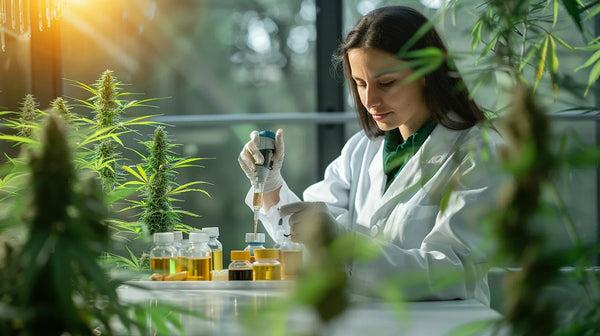
Cannabis Research and Modern Laboratories 🔬
Cannabis research has become increasingly sophisticated.
Scientists now use analytical chemistry, molecular biology, neuroscience, pharmacology, genetics, clinical research, and data science to investigate cannabinoids.
Researchers can measure cannabinoid concentrations with advanced laboratory instruments. Clinical researchers can study specific outcomes in controlled settings. Neuroscientists can investigate how cannabinoids influence signaling pathways.
This multidisciplinary approach is helping researchers move beyond simplistic discussions.
Modern research questions include how cannabinoids interact with receptors, how different formulations behave in the body, why individuals respond differently, and which medical applications have the strongest evidence.
Researchers are also investigating the long-term effects of different patterns of cannabis exposure.
As the field develops, better-designed studies can help separate promising therapeutic possibilities from unsupported claims.
This scientific approach is particularly important because cannabis products can vary widely. Standardized research products allow scientists to investigate specific cannabinoid compositions rather than treating all cannabis products as identical.
The future of cannabis health research will likely depend heavily on high-quality clinical trials, standardized products, reliable data, and transparent scientific communication. 🧪📚
The Role of Healthcare Professionals 🩺
Healthcare professionals can play an important role in cannabis-related decision-making.
Doctors, pharmacists, nurses, and other qualified professionals can help patients understand potential benefits, risks, medication interactions, and alternative treatment options.
Open communication is particularly important.
Patients may hesitate to tell healthcare providers about cannabis use because of stigma or concerns about judgment. However, accurate information about substance use can help healthcare professionals provide safer care.
A patient who uses cannabis should feel able to discuss that use honestly, particularly before surgery, when starting a new medication, or when experiencing unexplained symptoms.
Healthcare professionals can also help distinguish between medical evidence and marketing claims.
As the cannabis industry continues to evolve, consumers may encounter products marketed using words such as “natural,” “wellness,” “calming,” or “therapeutic.” Marketing language does not automatically establish medical effectiveness.
Evidence-based healthcare depends on examining the quality of available research. 📖
Cannabis Health and Public Education 📢
Public education is an important part of improving cannabis health literacy.
People need access to clear information about cannabinoids, product differences, impairment, possible side effects, medication interactions, and responsible decision-making.
Educational programs can help reduce misinformation.
For example, saying that cannabis is completely harmless is misleading. Saying that cannabis has no possible medical applications is also an oversimplification.
A more useful educational approach recognizes that cannabis contains biologically active compounds with both potential therapeutic applications and potential risks.
Schools, healthcare organizations, community groups, and public health agencies can contribute to responsible education by presenting evidence in accessible language.
Digital platforms also have an important role. Social media can spread useful information quickly, but it can also amplify exaggerated claims.
Readers should consider the source of health information, whether claims are supported by credible evidence, and whether the information applies to their particular situation.
Good cannabis education encourages curiosity while maintaining scientific caution. 🌱📚
Cannabis, Lifestyle, and Wellness 🌿✨
Cannabis is sometimes included in conversations about modern wellness. However, wellness should not be reduced to a single ingredient or product.
A healthy lifestyle generally includes multiple dimensions: balanced nutrition, physical activity, adequate sleep, social connection, stress management, preventive healthcare, and healthy habits.
Some people may explore cannabinoid products as part of their personal routines, but such products should not replace foundational health practices.
It is also useful to distinguish between wellness products and clinically evaluated medicines.
A product sold for general wellness may not have the same evidence, manufacturing standards, or regulatory oversight as an approved medical product.
Consumers should therefore examine product claims carefully.
Responsible wellness involves understanding personal needs, recognizing limitations, and avoiding unrealistic promises.
Cannabis health fits naturally into this broader framework because understanding both potential benefits and potential risks is more useful than relying on a simple positive or negative narrative. 🌱💚
The Future of Cannabis Health Research 🚀
The future of cannabis health research is likely to involve increasingly precise scientific questions.
Researchers may investigate individual cannabinoids separately, combinations of cannabinoids, delivery systems, and personalized approaches to treatment.
Advances in genetics and data science could also help researchers understand why people respond differently to the same cannabinoid.
Personalized medicine may eventually provide better information about which patients are most likely to benefit from particular therapies and which may face greater risks.
Researchers are also likely to continue studying long-term outcomes.
As cannabis laws and medical policies evolve in different regions, researchers will have additional opportunities to examine real-world patterns of use and health outcomes.
However, research quality will remain essential.
Large, carefully designed clinical studies can provide stronger evidence than anecdotes or small uncontrolled experiments. Transparent reporting can also help scientists and healthcare professionals understand limitations.
The future may bring new cannabinoid-based therapies, improved delivery systems, and better standards for product development. At the same time, some popular claims may not withstand rigorous scientific testing.
Both outcomes are part of scientific progress. 🔬🚀
Building Better Cannabis Health Literacy 📚
Cannabis health literacy means having the knowledge necessary to understand cannabis-related information and make informed health decisions.
A person with strong cannabis health literacy knows that:
Cannabis products can vary significantly.
THC and CBD have different properties.
Cannabinoid effects can differ from person to person.
Some medical applications have stronger evidence than others.
Cannabis can cause side effects and impairment.
Cannabis may interact with medications.
Pregnancy, adolescence, and certain medical circumstances require additional caution.
Healthcare professionals can provide individualized guidance.
Scientific evidence continues to develop.
These principles can help people navigate an increasingly complex cannabis information environment.
Health literacy also involves knowing when to ask questions.
If a person is uncertain about a product, medication interaction, side effect, or treatment option, seeking professional advice is generally more useful than relying on a random online claim.
Knowledge creates a foundation for safer choices. 🧠📖
Conclusion: A Balanced View of Cannabis Health 🌿💚
Cannabis health is a broad and evolving field that connects plant science, pharmacology, medicine, neuroscience, public health, and personal wellness.
The cannabis plant contains biologically active compounds that interact with the human body in complex ways. Researchers continue to investigate their potential therapeutic applications while also examining risks, side effects, long-term outcomes, and differences between individuals.
The most responsible approach is neither to treat cannabis as a miracle solution nor to dismiss all cannabis-related research. Instead, cannabis should be understood through evidence, context, and careful consideration.
For patients, consumers, educators, and researchers, reliable information is especially important. Product composition, dosage, method of use, individual health circumstances, medication interactions, and potential impairment can all influence outcomes.
As research develops, the public will benefit from clearer evidence and better education.
Ultimately, cannabis health is about more than cannabis itself. It is about making informed decisions, understanding the science, recognizing uncertainty, communicating openly with healthcare professionals, and approaching emerging health topics with curiosity and responsibility. 🌱🔬🩺
The future of cannabis research may reveal new medical possibilities, improve our understanding of cannabinoids, and contribute to more personalized approaches to healthcare. Until then, thoughtful education and evidence-based decision-making remain essential foundations for navigating the rapidly changing world of cannabis health. 🌿✨
