

Introduction
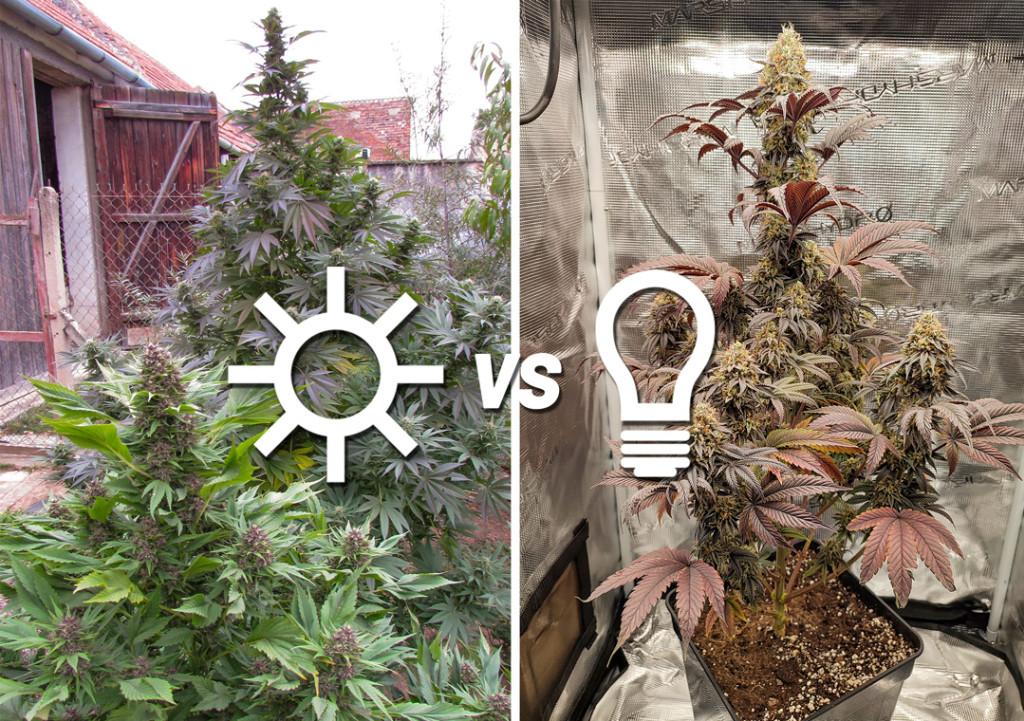
Cannabis cultivation is broadly divided into two main methods: indoor growing and outdoor growing. Each approach offers distinct advantages and challenges depending on climate, resources, legal environment, and grower goals.
While indoor cultivation focuses on full environmental control, outdoor cultivation relies on natural sunlight and open-air conditions. Understanding both helps growers choose the method that best fits their needs.
Indoor Cultivation: Controlled but Costly


Indoor cultivation takes place in controlled environments such as grow tents, rooms, or hydroponic systems.
Advantages of Indoor Growing
1. Full Environmental Control
Growers can control light, temperature, humidity, and nutrients. This leads to consistent plant development.
2. Year-Round Cultivation
Indoor setups are not dependent on seasons or weather conditions.
3. Higher Security & Privacy
Plants are protected from theft, pests, and external visibility.
4. Better Quality Consistency
Controlled environments often produce more uniform yields in terms of potency and appearance.
Disadvantages of Indoor Growing
1. High Energy Costs
Artificial lighting, ventilation, and climate control require significant electricity.
2. Expensive Setup
Equipment like LED lights, fans, filters, and grow tents can be costly.
3. Maintenance Intensive
Requires constant monitoring of temperature, humidity, and nutrient levels.
4. Environmental Impact
High electricity usage can lead to a larger carbon footprint.
Outdoor Cultivation: Natural but Unpredictable


Outdoor cultivation uses natural sunlight, soil, and weather conditions to grow cannabis plants in fields or gardens.
Advantages of Outdoor Growing
1. Lower Cost
Sunlight is free, and there is less need for expensive equipment.
2. Natural Growth Conditions
Plants grow in a more natural ecosystem, often leading to larger yields.
3. Energy Efficient
No artificial lighting or heavy climate control is required.
4. Larger Growing Space
Outdoor farms can support much bigger plants compared to indoor setups.
Disadvantages of Outdoor Growing
1. Weather Dependency
Rain, drought, frost, or heatwaves can heavily affect plant health.
2. Pest and Disease Risk
Outdoor plants are more exposed to insects and environmental threats.
3. Seasonal Limitations
Growth cycles depend on natural seasons and daylight availability.
4. Security Concerns
Plants are more visible and vulnerable to theft or damage.
Indoor vs Outdoor: Quick Comparison
| Factor | Indoor Cultivation | Outdoor Cultivation |
|---|---|---|
| Cost | High | Low |
| Control | Very high | Limited |
| Yield | Moderate to high | High (weather dependent) |
| Risk | Low external risk | Higher environmental risk |
| Energy Use | High | Low |
Conclusion
Both indoor and outdoor cannabis cultivation offer unique benefits. Indoor growing is ideal for those seeking precision, privacy, and consistency, while outdoor growing is better suited for large-scale, cost-effective production under favorable climates.
Ultimately, the choice depends on resources, environment, and cultivation goals—balancing control against nature’s unpredictability.
