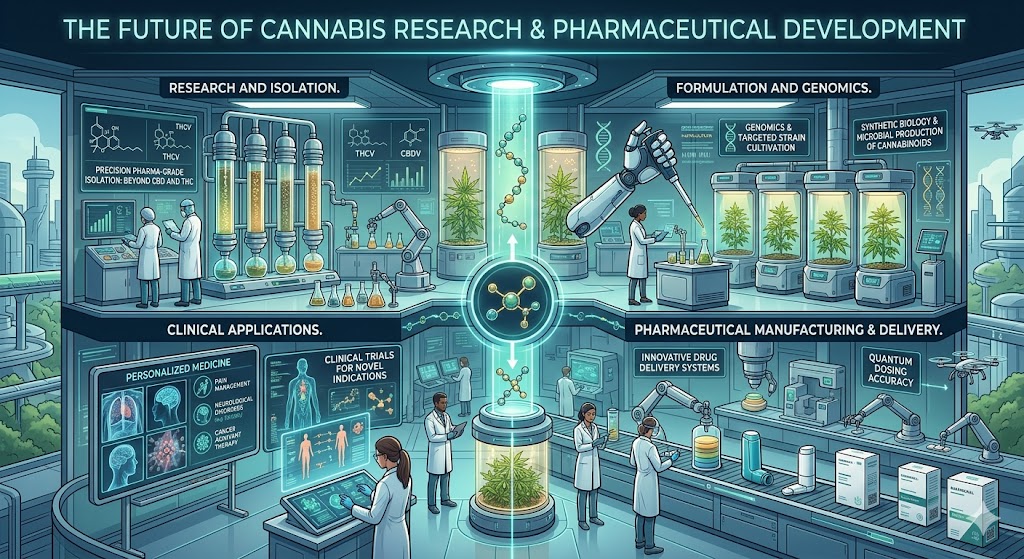
Cannabis research has shifted rapidly over the past two decades, moving from heavy legal restriction and stigma toward increasing medical acceptance and scientific exploration. As more countries legalize medical cannabis and decriminalize research, the plant is becoming a significant focus in modern pharmaceutical development. The future of cannabis research is likely to be shaped by advances in neuroscience, molecular biology, drug formulation technologies, and global regulatory reforms.
1. Expanding Scientific Understanding of Cannabinoids
Cannabis contains more than 100 active compounds known as cannabinoids, the most studied being THC (tetrahydrocannabinol) and CBD (cannabidiol). However, future research is moving beyond these two molecules to explore the “entourage effect,” where multiple cannabinoids and terpenes interact to influence therapeutic outcomes.
Scientists are now investigating how these compounds interact with the human endocannabinoid system, which plays a role in pain regulation, mood, appetite, immune response, and sleep. A deeper understanding of receptor-level interactions (CB1 and CB2 receptors) could lead to highly targeted therapies with fewer side effects than traditional medications.
2. Cannabis-Based Medicines in Modern Pharmacology
The pharmaceutical industry is increasingly developing standardized cannabis-based medications rather than relying on raw plant material. This allows for precise dosing, safety testing, and regulatory approval.
Some existing approved drugs already include cannabis-derived compounds, particularly for epilepsy, multiple sclerosis-related spasticity, and chemotherapy-induced nausea. In the future, we may see cannabis-based drugs designed for:
- Chronic pain management without opioids
- Neurodegenerative diseases like Parkinson’s and Alzheimer’s
- Anxiety and PTSD treatment
- Inflammatory conditions such as Crohn’s disease and arthritis
The key trend is moving from “plant medicine” to “precision cannabinoids” engineered for specific medical conditions.
3. Role of Biotechnology and Genetic Engineering
Biotechnology is expected to revolutionize cannabis pharmaceutical development. Through genetic engineering and selective breeding, researchers can create cannabis strains with optimized cannabinoid profiles—high CBD, low THC varieties, or even novel cannabinoid combinations not found in nature.
Additionally, synthetic biology may allow scientists to produce cannabinoids in yeast or bacterial cultures, reducing the need for large-scale farming. This could make production more consistent, cost-effective, and scalable for global pharmaceutical supply chains.
4. Improved Drug Delivery Systems
One of the biggest challenges in cannabis-based medicine is delivery and bioavailability. Smoking and vaping are not suitable for medical treatment due to inconsistent dosing and health risks.
Future developments are focused on advanced delivery systems such as:
- Nanoemulsions for faster absorption
- Transdermal patches for controlled release
- Sublingual sprays and tablets for precise dosing
- Encapsulated oral formulations with improved stability
These technologies will help transform cannabis into a mainstream, standardized pharmaceutical option similar to conventional drugs.
5. Clinical Trials and Evidence-Based Validation
A major barrier to cannabis medicine adoption has been limited large-scale clinical evidence. This is changing as governments and research institutions invest in controlled trials.
Future research will likely focus on:
- Long-term safety profiles
- Drug interactions with existing medications
- Standardized dosing protocols
- Comparative effectiveness against opioids and antidepressants
As more high-quality data emerges, cannabis-based therapies may gain broader acceptance in evidence-based medicine.
6. Regulatory and Global Market Evolution
Regulation will play a decisive role in shaping cannabis pharmaceutical development. Countries with progressive medical cannabis laws are becoming leaders in research innovation, while others are slowly following due to increasing patient demand and economic potential.
We can expect:
- More international harmonization of cannabis regulations
- Expansion of medical cannabis insurance coverage
- Increased pharmaceutical patents and intellectual property disputes
- Growth of a global cannabis pharmaceutical industry
Conclusion
The future of cannabis research and pharmaceutical development is moving toward a highly scientific, regulated, and technology-driven industry. What was once a controversial plant is gradually becoming a source of precision medicines with wide therapeutic potential. As research deepens and regulations evolve, cannabis may become a mainstream component of modern healthcare—offering alternatives or complements to existing pharmaceutical treatments across pain management, neurology, mental health, and beyond.
