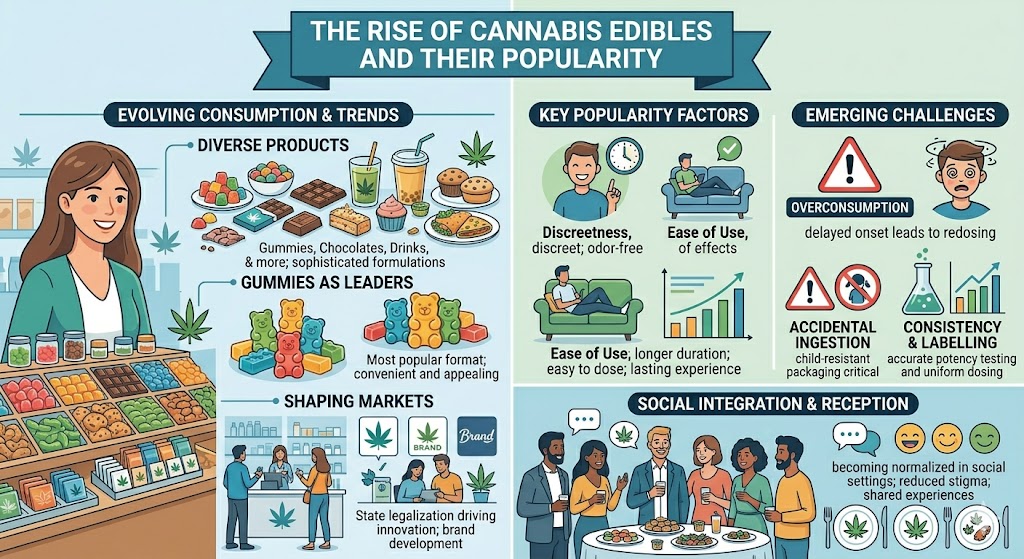
Cannabis edibles are rapidly growing in popularity due to their convenience, smoke-free experience, long-lasting effects, and variety, making them a major trend in modern cannabis culture.
Cannabis consumption has changed dramatically over the past decade. What was once largely associated with smoking dried cannabis flower has evolved into a sophisticated industry filled with oils, beverages, capsules, and one of the fastest-growing categories of all — cannabis edibles.
From gummies and chocolates to infused beverages and baked snacks, cannabis edibles have become a mainstream trend in both medical and recreational markets. Consumers are increasingly drawn to edibles because they offer discretion, convenience, longer-lasting effects, and smoke-free alternatives. As legalization spreads worldwide and attitudes toward cannabis continue to soften, the edible market is experiencing remarkable growth. Recent industry reports project the global cannabis edibles market could surpass $52 billion by 2034.


What Are Cannabis Edibles?
Cannabis edibles are food and beverage products infused with cannabinoids such as THC (tetrahydrocannabinol) or CBD (cannabidiol). THC is the psychoactive compound responsible for the “high” associated with cannabis, while CBD is non-intoxicating and commonly used for wellness purposes.
Edibles come in many forms, including:
- Gummies
- Chocolates
- Cookies and brownies
- Hard candies
- Beverages
- Capsules
- Mints
- Protein bars
- Cooking oils and butter
Unlike smoking or vaping, edibles are consumed orally and processed through the digestive system. This changes how cannabinoids enter the bloodstream and affects both the onset time and duration of effects.
One major reason for their popularity is variety. Consumers can choose products based on flavor, dosage, wellness goals, or desired experiences.
Why Cannabis Edibles Are Becoming So Popular
The rapid rise of cannabis edibles is not happening by accident. Several social, health, and cultural factors are driving demand across different age groups and consumer segments.
1. Smoke-Free Consumption
Many people are uncomfortable with smoking for health or lifestyle reasons. Edibles provide a way to consume cannabis without inhaling smoke or vapor.
This appeals especially to:
- Health-conscious consumers
- Older adults
- Wellness-focused users
- First-time cannabis consumers
As smoking declines globally in many industries, cannabis users are also seeking cleaner alternatives.
2. Discreet and Convenient
Edibles are easy to carry and consume discreetly. A gummy or infused beverage attracts far less attention than smoking cannabis in public.
This convenience has helped normalize cannabis use in social settings and among professionals who prefer subtle consumption methods.
3. Longer-Lasting Effects
Compared to smoking, edible effects usually last much longer. While inhaled cannabis may last a few hours, edibles can provide effects for six to eight hours or more depending on dosage and metabolism.
For medical users managing chronic pain, anxiety, or sleep disorders, this extended duration can be especially beneficial.
4. Better Flavor and Experience
Modern cannabis edibles are far more sophisticated than homemade brownies of the past. Companies now focus heavily on gourmet flavors, precise dosing, premium ingredients, and improved texture.
Consumers can find:
- Vegan gummies
- Sugar-free products
- Organic ingredients
- Low-dose wellness edibles
- Fast-acting formulations
Industry reports show strong growth in premium and precisely dosed products as consumers become more selective.


How Edibles Work Differently Than Smoking
Understanding how edibles work is important because their effects differ significantly from smoking cannabis.
When cannabis is smoked, THC enters the bloodstream quickly through the lungs. Effects may begin within minutes.
Edibles, however, must pass through the digestive system and liver first. This process converts THC into a stronger metabolite called 11-hydroxy-THC, which can create more intense and longer-lasting effects.
Typical Timeline for Edibles
| Stage | Time |
|---|---|
| Initial effects | 30–90 minutes |
| Peak effects | 2–4 hours |
| Total duration | 6–12 hours |
Because effects take longer to appear, inexperienced users sometimes consume additional doses too quickly, leading to overconsumption.
This is why many cannabis experts recommend the rule:
“Start low and go slow.”
The Rise of Cannabis Gummies
Among all edible categories, gummies have become the dominant product type.
Why gummies are popular:
- Easy portion control
- Consistent dosing
- Portable packaging
- Wide flavor selection
- Longer shelf life
- Appealing to beginners
Gummies are especially popular among younger adults and wellness-focused consumers who want a simple and predictable experience.
Reports also show rising demand for micro-dose gummies containing small amounts of THC or balanced THC/CBD combinations. These products appeal to users seeking relaxation without strong intoxication.
Cannabis Edibles in the Wellness Industry
One of the biggest shifts in recent years is the connection between cannabis and wellness culture.
Many consumers now use low-dose cannabis products for:
- Stress management
- Sleep support
- Relaxation
- Mood enhancement
- Pain relief
CBD-focused edibles, in particular, have gained popularity because they provide calming effects without producing a strong psychoactive experience.
Some wellness brands are combining cannabis with:
- Adaptogens
- Herbal extracts
- Melatonin
- Vitamins
- Functional ingredients
This crossover between cannabis and health products is helping edibles reach new consumer groups.
Older Adults and Cannabis Edibles
Interestingly, older adults are becoming an important demographic in the edible market.
Recent discussions and studies indicate that many seniors are exploring cannabis edibles for chronic pain, arthritis, sleep issues, and anxiety management.
Edibles are particularly appealing to older consumers because:
- They avoid smoking
- They offer controlled dosing
- They are easier on the lungs
- Effects last longer
Many older adults report using cannabis as an alternative to prescription medications or sleep aids.
The Role of Legalization
Legalization has played a massive role in the growth of cannabis edibles.
As more countries and U.S. states legalize medical or recreational cannabis:
- Retail access increases
- Product quality improves
- Regulations create safer products
- Consumer trust grows
North America currently dominates the global edibles market, accounting for over 74% of market share.
Countries such as Canada and several U.S. states have developed large legal cannabis industries with strong edible sales.
Legalization has also encouraged innovation. Companies are investing heavily in:
- Fast-acting technologies
- Better flavor masking
- Improved packaging
- Child-resistant containers
- Precise dosing systems
Cannabis Beverages: A Growing Trend
Cannabis-infused drinks are emerging as one of the hottest segments in the edible industry.
These include:
- THC sparkling waters
- CBD wellness drinks
- Cannabis teas
- Infused sodas
- Alcohol alternatives
Many consumers view cannabis beverages as a substitute for alcohol during social events.
Industry experts report strong interest in low-dose THC drinks aimed at “social consumption” and relaxation.
Some analysts believe cannabis beverages could eventually become a major competitor to alcoholic drinks, especially among younger generations.


Challenges Facing the Edible Industry
Despite rapid growth, the cannabis edible market still faces several challenges.
1. Regulation and Legal Complexity
Cannabis laws differ dramatically between countries and even between states or provinces.
Regulations often control:
- THC limits
- Packaging
- Marketing
- Distribution
- Product labeling
These changing rules can make expansion difficult for businesses.
2. Dosage Concerns
Because edibles take longer to activate, accidental overconsumption remains a concern.
New users may think the product is not working and take more before the initial dose fully activates.
This can result in:
- Anxiety
- Dizziness
- Panic reactions
- Extreme intoxication
Clear labeling and consumer education remain critical.
3. Appeal to Children
Colorful gummies and candy-like products sometimes raise concerns about accidental consumption by children.
To address this issue, many regions require:
- Child-resistant packaging
- Warning labels
- Restrictions on shapes and branding
4. Black Market Competition
Illegal cannabis products still compete heavily with legal markets in many regions.
Reports suggest illicit cannabis sales remain significantly larger than legal sales in some areas despite legalization efforts.
Consumer Trends Shaping the Future
The future of cannabis edibles appears highly promising, especially as consumer preferences evolve.
Micro-Dosing
Many consumers no longer seek extremely potent experiences. Instead, they prefer mild, manageable effects through low-dose products.
Micro-dosing allows users to:
- Stay functional
- Reduce anxiety
- Control experiences more carefully
Premium Products
Consumers increasingly want high-quality edibles with:
- Better ingredients
- Gourmet flavors
- Cleaner formulations
- Organic or vegan options
Faster-Acting Edibles
Traditional edibles may take over an hour to activate. New technologies are creating “fast-acting” products that work within 15–20 minutes.
This improved predictability could further expand mainstream acceptance.
Functional Wellness Products
Edibles targeting:
- Sleep
- Focus
- Recovery
- Relaxation
- Stress reduction
are expected to grow significantly in the coming years.
Social Acceptance of Cannabis
Perhaps the biggest factor behind the rise of cannabis edibles is changing public perception.
Cannabis is increasingly viewed less as a taboo substance and more as:
- A wellness product
- A recreational alternative
- A therapeutic option
- A lifestyle choice
Younger generations, especially Millennials and Gen Z consumers, tend to be more open to cannabis products than previous generations.
Some consumers are also reducing alcohol consumption and replacing it with cannabis products in social settings. This shift has created new opportunities for edible brands and cannabis beverages.
Medical Benefits and Research
Cannabis edibles are commonly used for medical purposes, including:
- Chronic pain management
- Anxiety reduction
- Sleep improvement
- Appetite stimulation
- Nausea relief
CBD-based products are especially popular among people seeking therapeutic effects without intoxication.
However, research into cannabis still continues, and experts emphasize responsible use, proper dosing, and medical guidance where appropriate.
The Future of Cannabis Edibles
The cannabis edible market is likely still in its early growth phase.
Industry analysts expect continued expansion driven by:
- Global legalization
- Product innovation
- Wellness trends
- Consumer education
- Improved formulations
As technology advances, cannabis edibles may become more personalized, predictable, and integrated into mainstream wellness culture.
Future products could include:
- Customized cannabinoid blends
- AI-driven dosage recommendations
- Fast-onset nano-emulsions
- Nutritional cannabis foods
- Functional wellness beverages
The industry is evolving rapidly from a niche market into a sophisticated global business.
Conclusion
Cannabis edibles have transformed the way people experience cannabis. Their convenience, discretion, variety, and smoke-free appeal have helped them become one of the fastest-growing segments in the cannabis industry.
From gummies and chocolates to infused beverages and wellness products, edibles are attracting consumers across multiple age groups and lifestyles. Legalization, innovation, and shifting cultural attitudes continue to fuel their popularity worldwide.
At the same time, education and responsible consumption remain essential. Because edibles affect users differently than smoking, understanding dosage and timing is crucial for safe experiences.
As the cannabis industry matures, edibles are expected to play an even larger role in shaping the future of cannabis consumption — blending wellness, recreation, and modern consumer trends into one rapidly growing global market.
